


 thanh tuyen
 26/11/2025
So far, 2025 has been a volatile year for the cryptocurrency market. Digital assets experience continuous sharp rises and drops, from record-breaking highs to deep corrections. And Bitcoin is no exception. To understand the current market landscape, many investors are asking questions: How has Bitcoin’s price fluctuated in 2025? And how much is one Bitcoin now? All of these insights will be covered in the detailed breakdown below.
In recent years, the cryptocurrency market has become more vibrant than ever, with Bitcoin consistently at the heart of every discussion. Bitcoin is the world’s first digital currency, created in 2009 by an individual or group under the pseudonym Satoshi Nakamoto. Unlike fiat currencies, Bitcoin operates on blockchain technology and is not controlled by any bank or government. With a limited supply of only 21 million coins, Bitcoin is highly scarce and is often referred to as “digital gold.”
Entering 2025, Bitcoin remains the most influential cryptocurrency, with a market cap of over $1.7 trillion and millions of transactions occurring daily. Beyond being an investment asset, Bitcoin is now widely used, from payment methods to collateral in decentralized financial products. It is the combination of scarcity value, market power, and practical application that has established Bitcoin’s role as an indispensable part of the modern financial landscape.
Cryptocurrencies are inherently volatile, and Bitcoin is no exception. In 2025, Bitcoin underwent several significant price fluctuations. Below are the notable milestones:
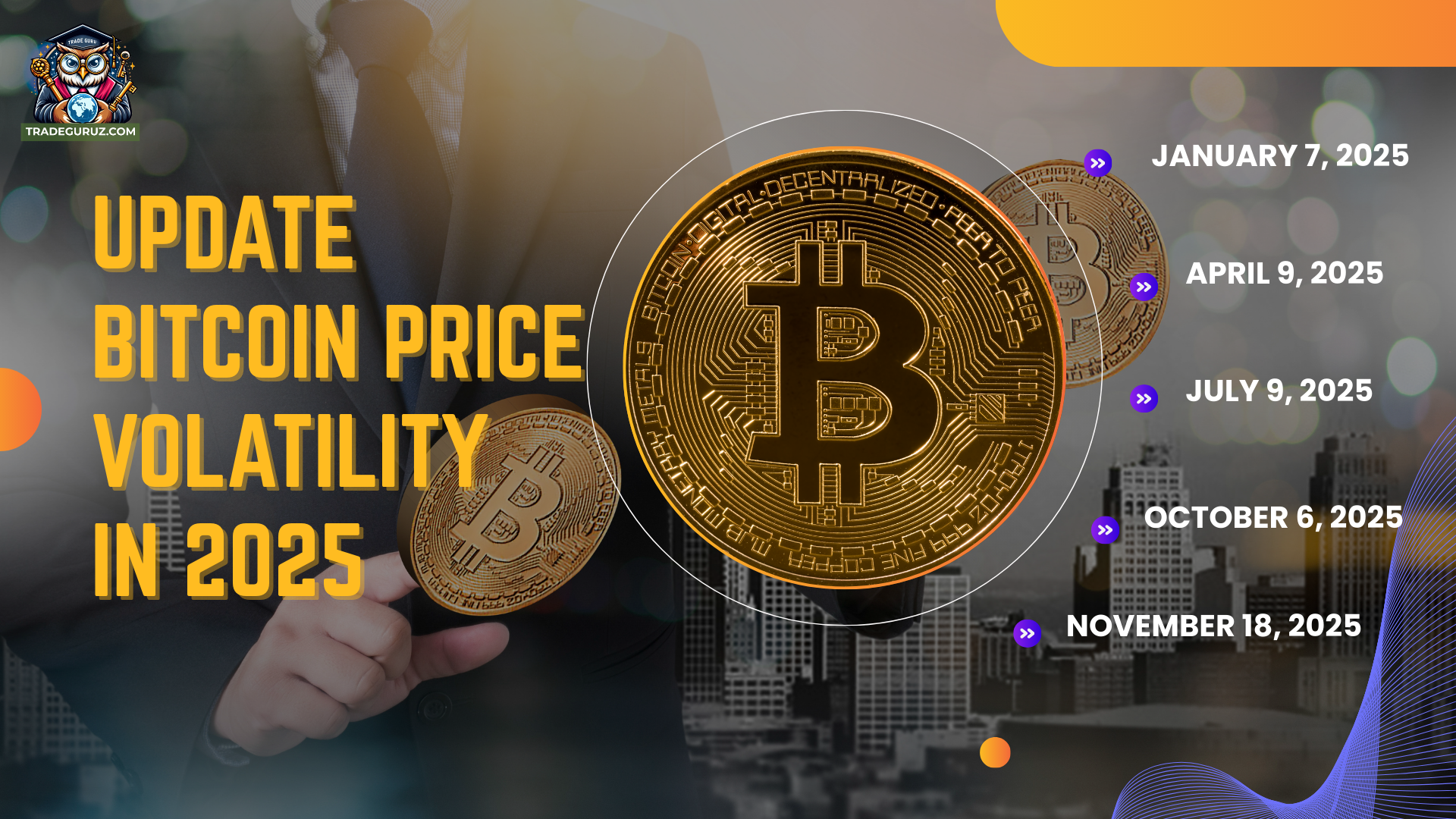
Following the positive momentum of late 2024, Bitcoin had a bright start in early 2025. A major catalyst was Donald Trump’s re-election and his pro-crypto policy promises. Optimism surrounding a crypto-friendly administration helped push Bitcoin past the $100,000 mark for the first time in the year on January 7.
After several months of steady growth, Bitcoin plunged to $76,000 on April 9, marking its lowest level of 2025 so far. This sharp decline occurred as the stock market also tumbled following Trump’s announcement of reciprocal tariffs on multiple countries. Concerns over a trade war triggered widespread risk-off sentiment. Additionally, Mr. Michael Saylor's largest Bitcoin-holding listed company reported an unrealized loss of $5.91 billion, further accelerating the downward pressure on the cryptocurrency.
On July 9, Bitcoin regained investor confidence by rallying to a new all-time high of nearly $112,000. This growth was primarily driven by strong inflows into Bitcoin ETFs and major institutional funds, coupled with a rising risk-on sentiment. Besides, more large financial institutions began viewing Bitcoin as a potential reserve asset, boosting long-term confidence in its future.

Breaking its previous record in July, Bitcoin hit a new ATH of $126,073 on October 6, 2025. A key driver behind this surge was the continued U.S. government shutdown, which increased demand for safe-haven assets. At the same time, massive capital flowed into Bitcoin. Within just one week, Bitcoin attracted a record $3.55 billion in investment inflows, reaffirming its position as the world's leading digital asset.
In the final months of 2025, the red color returned when Bitcoin value fell below $90,000 during the November 18 trading session. The primary cause was the escalating U.S.-China trade tensions, prompting investors to seek safer assets instead of volatile cryptocurrencies. Moreover, previous drivers, such as low interest rates, no longer supported the market. In other words, there was little optimism left for the near future.
In the final days of November, the Bitcoin market has turned noticeably gloomy. Early on November 21, Bitcoin suddenly dropped sharply from $91,000 to $87,000, then continued to break below $86,000. By the evening, Bitcoin had fallen nearly 11% in a single day, hitting $80,700. Although the price soon recovered to around $83,000 per BTC, many investors remained concerned that the downtrend could continue.
Intraday price movements show that Bitcoin fluctuates minute by minute, influenced by global supply and demand, ETF flows, and market sentiment. How much is one Bitcoin? To find the answer, you should track real-time data instead of relying on outdated numbers.

Analysts have mixed forecasts for Bitcoin in the final month of 2025. Overall, there are two main scenarios:
Some experts believe Bitcoin may remain stuck in a tight trading range in December if the U.S. Federal Reserve does not cut interest rates. Bitcoin has shown immediate reactions whenever the likelihood of rate cuts decreases, such as when it fell below $90,000 recently. As expectations for Fed rate cuts become less optimistic, a similar reaction could happen again. Furthermore, on-chain data also shows that long-term holders have begun selling large amounts of Bitcoin, which is often a strong indicator of profit-taking phases and increased downward pressure. Forecasts suggest that Bitcoin may trade sideways between $60,000 and $80,000 by year-end.
In the second scenario, forecasters still expect December to see a year-end rally. Typically, Bitcoin prices tend to rise 25-30% during the Christmas period. If this scenario repeats, Bitcoin could trade in the $120,000 to $125,000 range. This price is driven by various factors, including the post-halving shortage, reduced selling pressure, and growing confidence among long-term investors.
However, all predictions may change once the Federal Reserve meets on December 9-10. The Fed’s decision will be the clearest indicator in determining market trends.
Cryptocurrencies remain preferred choices for millions of investors. Besides tracking the price, choosing a reputable exchange is just as important. Below are three of the most widely used platforms today:

The first name that comes to mind in crypto trading is the giant Binance. This is the world’s largest cryptocurrency exchange by trading volume, with a daily trading volume of $65 billion. Binance proudly serves more than 298 million users worldwide. Its trading fees are among the lowest in the industry, starting at just 0.10% for Spot trading. Binance is also one of the most liquid exchanges, ensuring Bitcoin orders are executed almost instantly with minimal slippage. In addition, user security is Binance's top priority. In 2018, Binance established the SAFU (Secure Asset Fund for Users) to protect users in the event of a security incident. As of September 2025, the SAFU wallet holds a reserve of 1 billion USDC. These strengths have made Binance the number one choice for millions of global investors.
Open a Binance account and start your trading journey today!

Next on the list and equally notable is Bybit. Although its 24H trading volume is smaller than Binance's, Bybit still records an impressive $25 billion in daily transactions. Bybit boasts a diverse crypto portfolio with over 2,300 listed cryptocurrencies, catering to the needs of most users. Bybit also delivers competitive trading fees of only 0.10% for each Spot transaction. One of Bybit’s strongest advantages is its regulatory compliance. It is overseen by multiple reputable financial authorities, including the Dubai Digital Asset Authority, the National Bank of Georgia, and the Astana Financial Services Authority (Kazakhstan). Additionally, Bybit also stands out for its smooth and accurate trading experience. If speed is your priority, Bybit is an excellent choice.
Open a Bybit account and start your trading journey today!
Rounding out the list is KuCoin. KuCoin attracts over 40 million global users, with a 24-hour trading volume of more than $8.4 billion. Similar to Binance and Bybit, KuCoin offers low trading fees starting from 0.1%. It also invests heavily in industry-leading verification and security solutions to ensure transparency and user protection. According to the Proof of Reserves system, KuCoin maintains a 116% BTC reserve ratio, meaning it holds more Bitcoin than customers have deposited. This gives users more peace of mind regarding its safety and solvency. KuCoin is known as “the exchange for all investors” thanks to its user-friendly interface, multilingual support, and detailed guides, making it easy to use for both newbies and experienced traders.
Open a KuCoin account and start your trading journey today!
In 2025, Bitcoin experienced extreme price swings, from record highs to deep corrections, reflecting the cryptocurrency market’s sensitivity to economic policies, institutional capital flows, and global investor sentiment. The question “How much is one Bitcoin?” should always be checked through real-time data to make informed decisions. Hopefully, the market can regain momentum in the final month of the year, bringing more positive signals for investors.
Thank you for taking the time to read this article.
For more information, please contact us at TRADEGURUZ.


 Language
 Vietnamese